

0
The Operational Backbone of the CAGP Specialization EE410 is the first course in GIEE’s Grid Add-On track and the operational …
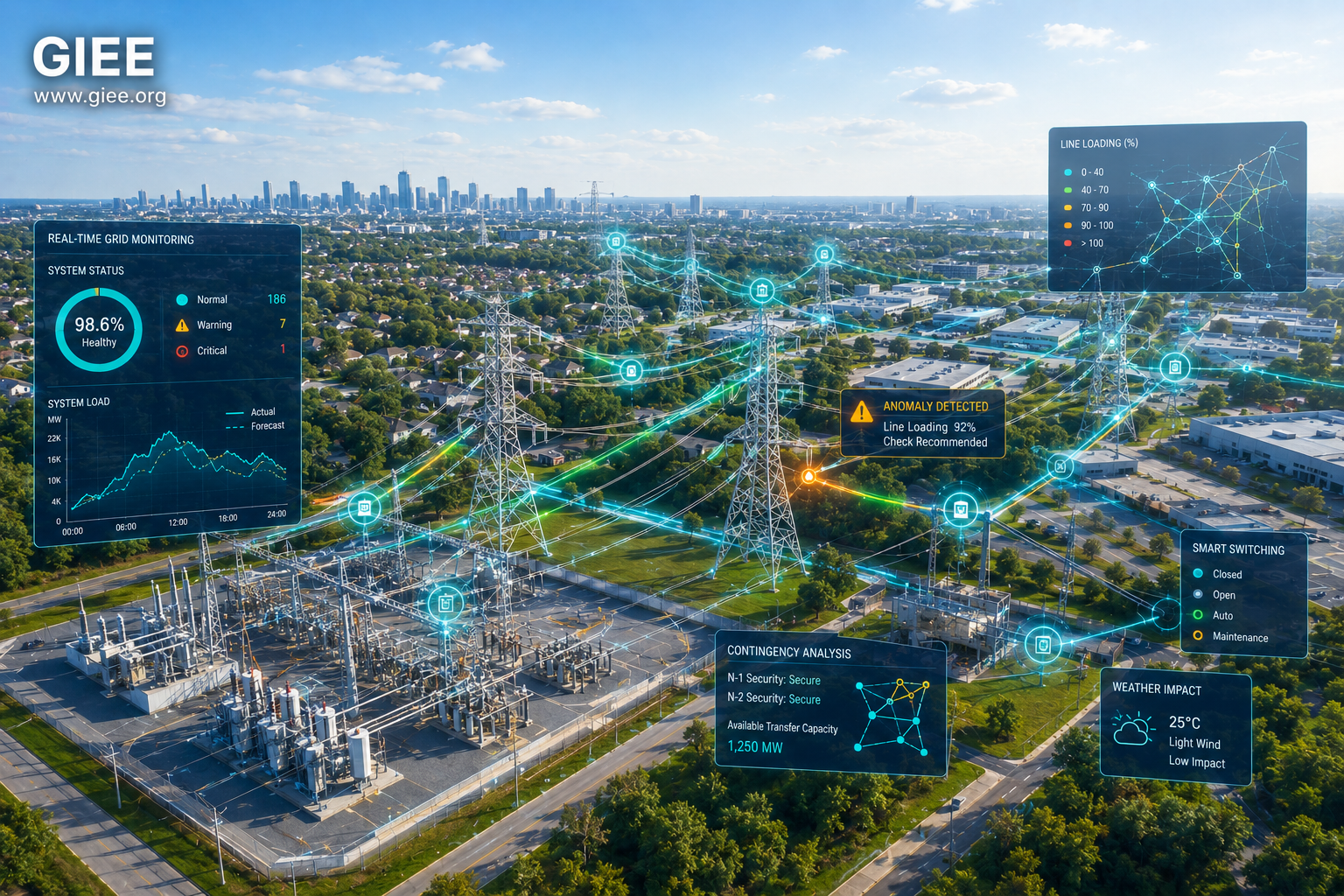
The Operational Backbone of the CAGP Specialization
EE410 is the first course in GIEE's Grid Add-On track and the operational foundation of the CAGP (Certified AI for Grid Professional) certification. Where the Core curriculum (EE400-EE408) builds general AI capability for energy professionals, the Grid Add-On goes deep on the applications specific to grid operations and utility infrastructure.
You will move from general AI knowledge to detailed understanding of how artificial intelligence is being deployed across the operational layer of modern utilities: smart grid architecture, real-time monitoring with PMU and SCADA data, distribution automation including AI-driven switching and voltage regulation, and the modern utility control centers that coordinate everything. Every concept is grounded in concrete operational metrics and real utility deployments.
EE410 is required for the CAGP — Certified AI for Grid Professional certification. Combined with the 9 Core courses (EE400-EE408) and the other Grid Add-On courses (EE411 and EE412), EE410 forms the basis for genuine grid AI specialization that utility employers recognize and value.
What You Will Learn
- Architect AI-enhanced smart grid systems across the field, communication, application, and decision layers
- Apply AI to real-time grid monitoring including PMU stability analysis and SCADA streams
- Design automated distribution systems with AI-driven switching, voltage regulation, and capacitor control
- Quantify AI impact on operational metrics: SAIDI, SAIFI, MAIFI, distribution losses
- Integrate AI coordination layers across AMI, SCADA, weather, and market data sources
- Apply AI to outage management: prediction, response, and restoration
- Evaluate the business case for smart grid AI investments using utility-specific benchmarks
- Recognize where AI delivers genuine operational value versus where traditional engineering remains superior
Course Structure
EE410 is organized into four modules covering the operational AI landscape from architecture through control center applications:
- Module 1: Smart Grid Architecture and the AI Layer — Smart grid architecture across all layers (field, communication, application, decision). Where AI fits and where it does not. The reference architecture utilities are converging on.
- Module 2: Real-Time Monitoring and Anomaly Detection — AI for PMU stability analysis, contingency analysis, anomaly detection in SCADA streams. The applications that make grid operators more effective at the operational tempo of the grid.
- Module 3: Distribution Automation — AI-driven switching, voltage regulation, capacitor bank control, and the modern self-healing grid. How distribution AI changes the work of distribution operations.
- Module 4: Outage Management and the Modern Control Center — AI for outage prediction, response, and restoration. The integration of AI across the modern utility control center. Coordination of AMI, SCADA, weather, and market data through the AI layer.
Real-World Examples
Every concept is grounded in real utility deployments and operational metrics. See how a major distribution utility used machine learning to reduce SAIFI by 15% over three years through AI-driven outage prediction. Examine the PMU-based stability monitoring deployed by a transmission ISO for early detection of grid stress events. Review the distribution automation rollout at an investor-owned utility that reduced average outage duration by 22%. Understand the AMI-SCADA-weather coordination architecture at a multi-state utility. Real numbers, real organizations, real operational impact.
Who This Course Is For
- Distribution engineers, transmission engineers, and grid operations professionals
- Utility AI champions building grid operational AI capability
- Engineers preparing for CAGP certification
- Engineering leaders evaluating smart grid AI investments
- Control center engineers and operators interested in next-generation tools
- Engineers transitioning from traditional grid roles into AI-augmented operations
Prerequisites
- EE400 — AI and Machine Learning Fundamentals for Energy (required)
- EE405 — AI Across the Energy Value Chain (recommended for strategic context)
- Engineering or technical background in electrical engineering, power systems, or grid operations
- Working knowledge of SCADA, AMI, or distribution automation concepts is helpful but not required
Format and Access
- Duration: Approximately 10 hours of content
- Format: Self-paced online with video instruction, demonstrations, and quizzes
- Course Access: 6 months of full access from enrollment
- Completion Window: 90 days to complete coursework and the final exam
- Assessment: 4 module quizzes (30% of grade) + comprehensive final exam (70% of grade)
- Passing Score: 70% overall
- Language: English
- AI Tools: Encouraged for learning and exercises; prohibited during quizzes and the final exam
Path to Certification
EE410 is the first of three Grid Add-On courses and a required course for CAGP certification:
- CAGP — Certified AI for Grid Professional: Complete the 9 Core courses (EE400 through EE408) plus the 3 Grid Add-On courses (EE410, EE411, EE412), then pass the CAGP certification exam. Total of 12 courses for the credential most valued by utility employers and grid-focused organizations.