
0
The Three Frontier Applications Shaping the Next Decade EE422 is the third and final course in GIEE’s Energy Add-On track …
The Three Frontier Applications Shaping the Next Decade
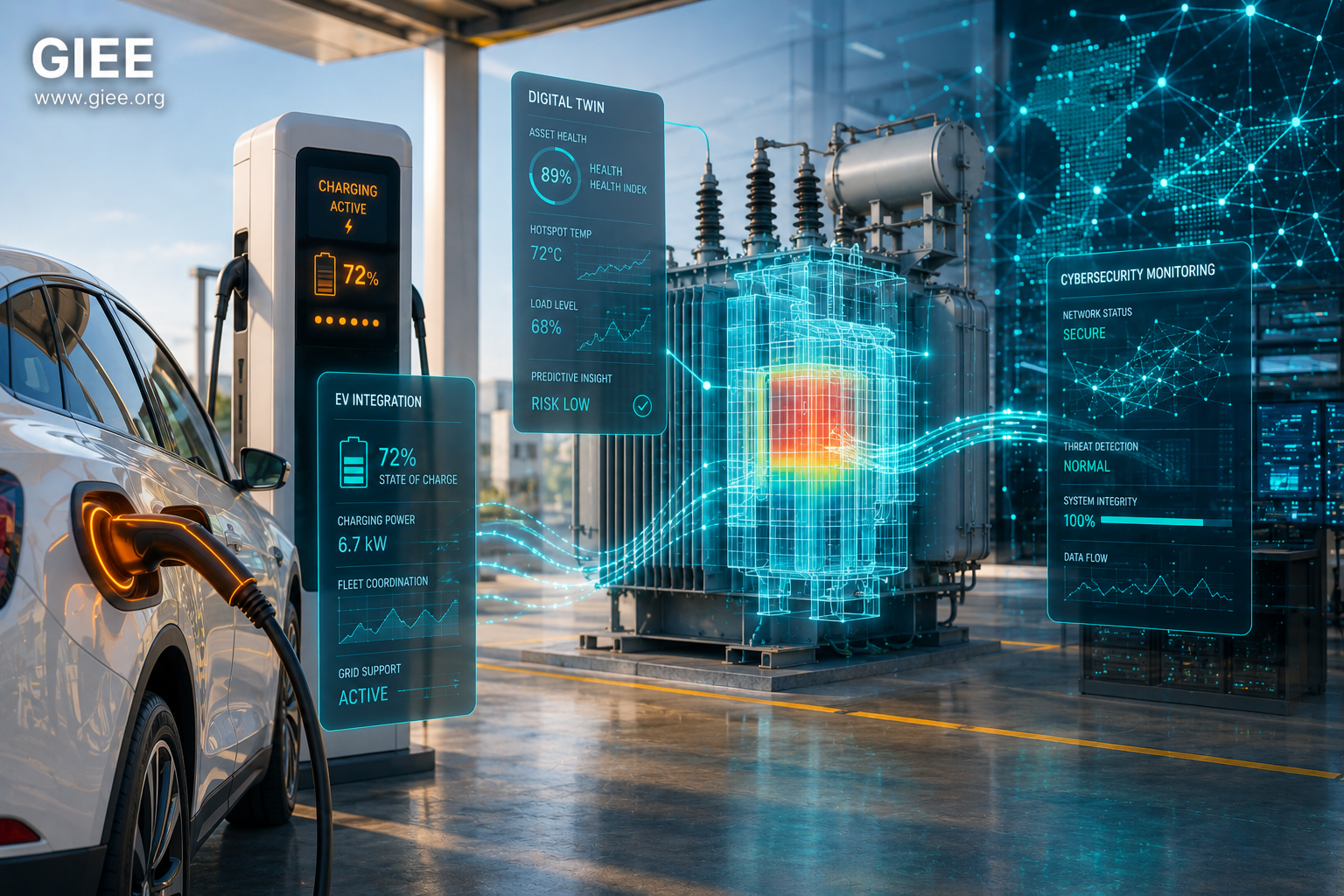
EE422 is the third and final course in GIEE's Energy Add-On track and completes the CAEP (Certified AI for Energy Professional) certification path. The course covers three frontier AI application areas that will define the next decade of energy: electric vehicle integration at scale, digital twins for energy assets, and AI-driven cybersecurity for critical infrastructure.
These three applications share a common characteristic — they are emerging from pilot deployments into mainstream operational use right now. EV adoption is moving from "interesting future trend" to "active grid impact." Digital twins are evolving from marketing concepts into genuinely operational systems. AI-driven cybersecurity is moving from defensive supplement to operational necessity. Engineers who understand these applications today will lead the deployments of tomorrow.
You will learn how AI handles the spatial and temporal complexity of EV charging load forecasting, how smart charging strategies (V1G and V2G) coordinate massive vehicle fleets, how digital twins integrate physical assets with AI intelligence layers, and how AI-driven cybersecurity protects the operational technology networks that run the grid. Each application is grounded in real engineering decisions, real architectures, and real production deployments.
EE422 is required for the CAEP — Certified AI for Energy Professional certification. Completing EE422 alongside the 9 Core courses, EE420, and EE421 means students have all 12 courses required for CAEP. The certification examination becomes the final step.
What You Will Learn
- Forecast EV charging load using telematics, charging history, and behavioral data
- Design smart charging strategies including V1G (managed charging) and V2G (vehicle-to-grid) programs
- Quantify the spatial and temporal grid impact of EV adoption at scale
- Architect digital twins integrating physical assets with AI intelligence layers
- Apply digital twin technology to transformers, feeders, and renewable plants
- Apply AI to grid cybersecurity for OT networks and critical infrastructure
- Implement AI-driven SIEM, behavioral baselines, and anomaly detection for utility systems
- Navigate NERC CIP compliance considerations specific to AI cybersecurity deployments
Course Structure
EE422 is organized into four modules, with one module dedicated to each frontier application plus an integration module:
- Module 1: AI for EV Integration — EV adoption trajectories and grid impact. EV load forecasting using telematics and charging history. Spatial and temporal modeling of charging demand. The data infrastructure that enables EV-aware grid planning.
- Module 2: Smart Charging and Vehicle-to-Grid — V1G managed charging strategies. V2G vehicle-to-grid technology and economics. Fleet-to-grid programs that monetize EV battery flexibility. Coordination of EV charging with renewable generation and grid constraints.
- Module 3: Digital Twins for Energy Assets — The three pillars of digital twins: physical asset, digital model, AI intelligence layer. Digital twins for transformers, feeders, and renewable plants. Operational integration patterns. The path from marketing concept to production digital twin systems.
- Module 4: AI for Grid Cybersecurity — AI-driven SIEM and behavioral baseline detection. OT network protection using machine learning. NERC CIP compliance considerations specific to AI deployments. The unique cybersecurity challenges of AI systems themselves.
Real-World Examples
Every concept is grounded in real industry deployments. Examine the EV load forecasting deployment at a utility serving a region with 20 percent EV adoption that quantified grid impact at the feeder level. Review the V2G fleet program at a school bus operator coordinating 200 vehicles for grid services. Explore the operational digital twin deployed for a fleet of large power transformers that detected developing faults months earlier than traditional methods. Analyze the AI-driven SIEM platform that identified a sophisticated OT network intrusion attempt at a transmission utility. Real applications, real architectures, real operational impact.
Who This Course Is For
- Engineers responsible for EV grid integration and electrification programs
- Utility EV program managers and customer-side electrification teams
- Engineers exploring or deploying digital twin technology
- Asset management engineers interested in next-generation monitoring
- OT cybersecurity engineers and grid security professionals
- Innovation teams scanning for high-impact emerging applications
- Engineers preparing for CAEP certification
Prerequisites
- EE400 — AI and Machine Learning Fundamentals for Energy (required)
- EE401 — Deep Learning, LLMs and Generative AI for Energy (helpful for digital twin AI layer concepts)
- EE405 — AI Across the Energy Value Chain (recommended for strategic context)
- Engineering or technical background
- Working knowledge of EV charging, asset management, or cybersecurity is helpful but not required
Format and Access
- Duration: Approximately 10 hours of content
- Format: Self-paced online with video instruction, demonstrations, and quizzes
- Course Access: 6 months of full access from enrollment
- Completion Window: 90 days to complete coursework and the final exam
- Assessment: 4 module quizzes (30% of grade) + comprehensive final exam (70% of grade)
- Passing Score: 70% overall
- Language: English
- AI Tools: Encouraged for learning and exercises; prohibited during quizzes and the final exam
Path to Certification
EE422 is the third and final Energy Add-On course required for CAEP certification:
- CAEP — Certified AI for Energy Professional: Complete the 9 Core courses (EE400 through EE408) plus the 3 Energy Add-On courses (EE420, EE421, EE422), then pass the CAEP certification exam. Total of 12 courses for the credential most valued by renewable developers, market analysts, energy traders, and broader energy professionals.
Completing EE422 means students have completed the full CAEP coursework. The certification examination becomes the final step toward earning the Certified AI for Energy Professional credential.