

0
From Solar Concepts to Specified Systems EE201 is the engineering design course at the heart of GIEE’s CSPP track. Where …
From Solar Concepts to Specified Systems
EE201 is the engineering design course at the heart of GIEE's CSPP track. Where EE200 establishes the foundational understanding of solar PV systems, EE201 takes engineers into the detailed design and sizing methods that turn solar concepts into specified systems ready for procurement, permitting, and installation.
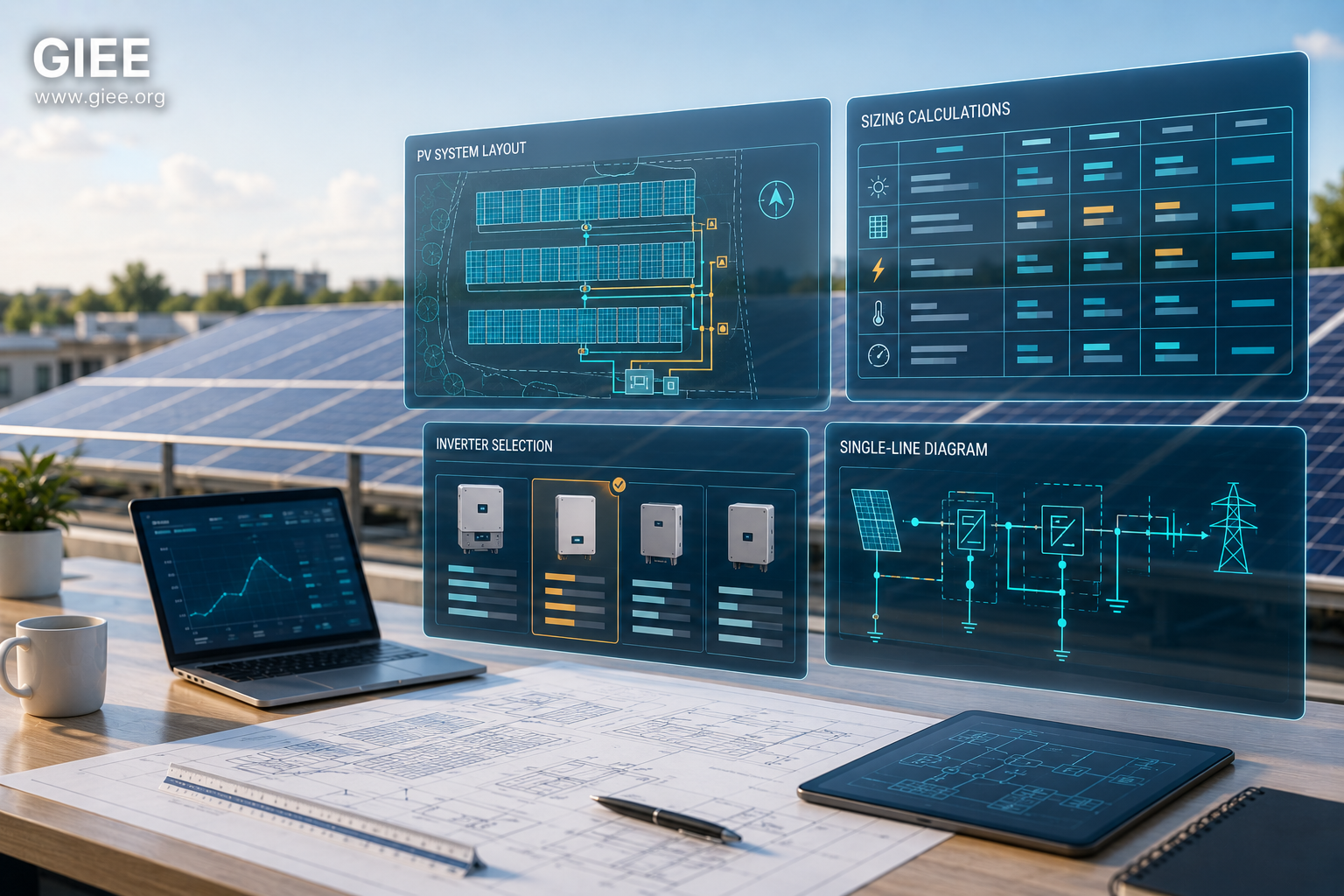
You will move from "I understand how solar works" to "I can size and specify a solar PV system." The course covers detailed PV system sizing methodology, string design and inverter selection, DC/AC ratio optimization, shading analysis, energy modeling fundamentals, and the workflow that produces complete project documentation. Every concept is grounded in real engineering decisions and worked through with realistic project examples.
EE201 sits between EE200 (foundations) and EE202 (electrical design, codes, and operations) in the CSPP track. The three courses together deliver the engineering capability that solar developers, installers, and engineering firms expect from a credentialed solar PV professional.
EE201 is required for the CSPP — Certified Solar PV Professional certification. Combined with EE200, EE202, and EE203, the four-course CSPP track delivers the foundational professional capability for solar PV engineering work.
What You Will Learn
- Apply detailed PV system sizing methodology for residential, commercial, and utility-scale installations
- Design strings: voltage at temperature extremes, inverter compatibility, MPPT input optimization
- Select inverters based on DC/AC ratio optimization, efficiency curves, and system architecture
- Perform shading analysis and tilt/azimuth optimization for real sites
- Use energy modeling at a foundational level to estimate annual production
- Develop single-line diagrams and key project documentation
- Recognize the trade-offs between residential, commercial, and utility-scale design approaches
- Apply NEC Article 690 fundamentals as they relate to system design (with deeper code mastery in EE202)
Course Structure
EE201 is organized into four modules covering solar PV design and sizing from concept through documented system:
- Module 1: PV System Sizing Methodology — Load analysis, system sizing for grid-tied and off-grid applications, oversizing considerations, and the methodology that produces correct system sizes for different project types and customer goals.
- Module 2: String Design and Inverter Selection — String voltage at temperature extremes, MPPT input matching, parallel string considerations. Inverter selection: string vs central vs microinverter architectures. DC/AC ratio optimization for different climate zones and economic conditions.
- Module 3: Site Optimization and Shading — Shading analysis methods. Tilt and azimuth optimization. Mounting orientation trade-offs. Row spacing for ground-mount systems. The site-specific decisions that determine production.
- Module 4: Energy Modeling and Project Documentation — Foundational energy modeling concepts (with deeper simulation in EE203). Single-line diagram development. Key project documentation: equipment lists, layout drawings, basic specifications. The deliverables that turn design into a constructible project.
Real-World Examples
Every concept is grounded in real solar design scenarios. Work through the sizing methodology for a residential rooftop installation showing string design with realistic temperature extremes. Examine a commercial flat-roof installation with shading challenges and the resulting string design implications. Review the inverter selection decision for a 500-kilowatt commercial system comparing string and central inverter architectures. Explore the DC/AC ratio optimization for a utility-scale solar farm in a sunny southwestern climate. Real designs, real engineering decisions, real trade-offs.
Who This Course Is For
- Engineers building solar PV design competency for project work
- Engineers preparing project deliverables for solar installations
- Solar developers and EPC engineers responsible for system design
- Recent engineering graduates building solar engineering skills
- Engineers in adjacent fields transitioning into solar design roles
- Anyone pursuing CSPP certification
Prerequisites
- EE200 — Introduction to Solar Power Systems (required; foundational solar concepts)
- Engineering or technical background
- Comfort with basic algebra and arithmetic for sizing calculations
- No prior solar design experience required
Format and Access
- Duration: Approximately 10 hours of content
- Format: Self-paced online with video instruction, worked design examples, and quizzes
- Course Access: 6 months of full access from enrollment
- Completion Window: 90 days to complete coursework and the final exam
- Assessment: 4 module quizzes (30% of grade) + comprehensive final exam (70% of grade)
- Passing Score: 70% overall
- Language: English
- AI Tools: Encouraged for learning and exercises; prohibited during quizzes and the final exam
Path to Certification
EE201 is the second of four Solar PV courses required for CSPP certification:
- CSPP — Certified Solar PV Professional: Complete EE200 (Introduction to Solar Power Systems), EE201 (Advanced Solar Power Systems), EE202 (Solar PV Electrical Design, Codes, and Operations), and EE203 (Solar PV Modeling, Simulation, and Energy Yield Analysis), then pass the CSPP certification exam. Total of 4 courses for the credential designed to prepare engineers for professional solar PV work.
CSPP is a foundation credential designed to complement, not replace, industry credentials like NABCEP. Engineers seeking the deepest installation credentials may also pursue NABCEP PV Installation Professional certification using the GIEE CSPP curriculum as preparation.