
0
The Practical Toolkit Course EE406 is the practical toolkit course of GIEE’s AI in Energy curriculum. Where other Core courses …
The Practical Toolkit Course
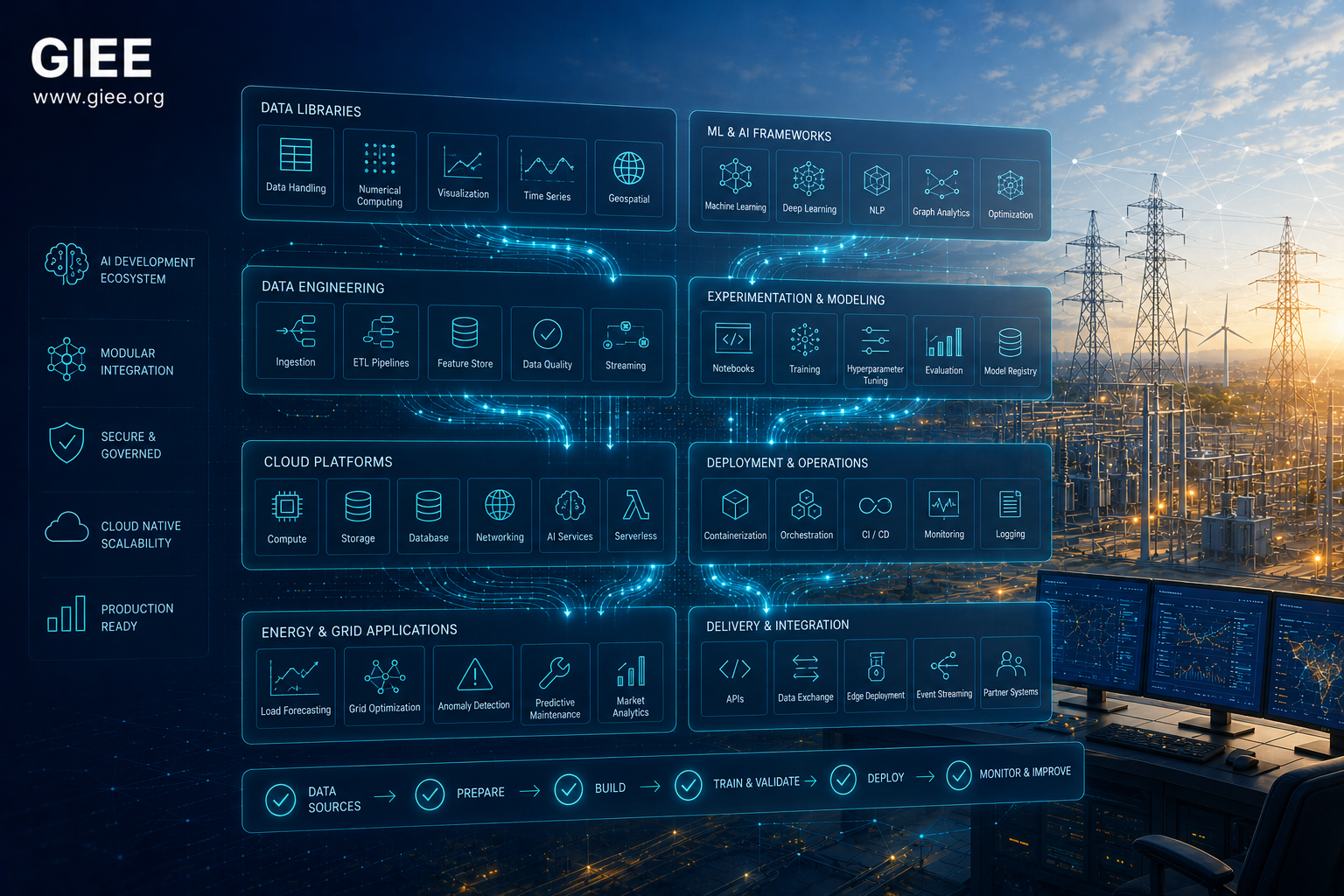
EE406 is the practical toolkit course of GIEE's AI in Energy curriculum. Where other Core courses teach you concepts and methods, EE406 gives you the map of tools, libraries, and cloud platforms that turn those concepts into working solutions. This is the course you will return to as a reference throughout your AI journey.
You will learn the Python AI ecosystem from the ground up: which libraries to use for what tasks, how they fit together, and what to learn next based on your specific goals. You will then explore the major cloud AI platforms (Microsoft Azure ML, AWS SageMaker, Google Vertex AI) and learn how to choose between them based on your organization's existing enterprise commitments rather than abstract feature comparisons.
The course is built to be practical and reference-oriented. You leave with a clear personal learning path through the Python AI ecosystem and a decision framework for cloud platform selection. Engineers consistently report consulting EE406 materials months and even years after completion.
EE406 is required for both CAGP (Certified AI for Grid Professional) and CAEP (Certified AI for Energy Professional) certifications. It is also a Phase 1 priority course in GIEE's launch sequence, alongside EE400 (Fundamentals) and EE403 (Prompt Engineering and RAG).
What You Will Learn
- Navigate the Python AI and data science ecosystem with confidence
- Choose appropriate libraries for data manipulation, machine learning, deep learning, LLM, and MLOps tasks
- Build a personal learning path through Python AI tooling based on your goals
- Compare the major cloud AI platforms (Azure ML, AWS SageMaker, Google Vertex AI) on practical dimensions
- Make platform selection decisions based on existing enterprise commitments, not abstract feature comparisons
- Recognize when to use cloud AI platforms versus when local or edge deployment is more appropriate
- Understand the tooling implications of common architectural choices
- Avoid the most common mistakes in tooling and platform selection
Course Structure
EE406 is organized into four modules covering the full toolkit landscape from data libraries through cloud platforms:
- Module 1: The Python AI Foundation — pandas, NumPy, scikit-learn, and the data and ML libraries every practitioner needs. How they fit together and what each is for.
- Module 2: Deep Learning and LLM Libraries — PyTorch, TensorFlow, Hugging Face, the OpenAI and Anthropic SDKs, LangChain, and LlamaIndex. The tooling for modern AI applications.
- Module 3: MLOps and Productionization Tools — MLflow, FastAPI, Docker, Evidently AI, and the libraries that turn models into deployable systems.
- Module 4: Cloud AI Platforms and Edge Deployment — Azure ML, AWS SageMaker, Google Vertex AI compared on practical dimensions. When to use cloud platforms versus local or edge deployment. Decision framework for enterprise platform selection.
Real-World Examples
Every library and platform is grounded in real energy applications. See how a utility data team chose pandas plus DuckDB for AMI data analytics. Compare a renewable IPP's PyTorch-based forecasting pipeline with their migration considerations to TensorFlow. Examine the Azure ML deployment for a transmission utility with existing Microsoft 365 commitments. Review the SageMaker architecture used by an ISO for market forecasting. Real organizational decisions, real tooling trade-offs, real engineering judgment.
Who This Course Is For
- Engineers ready to start building AI solutions and need a clear tooling roadmap
- Data and AI teams making library and platform standardization decisions
- Engineering leaders evaluating AI infrastructure investments
- Practitioners moving from concept understanding to hands-on implementation
- Anyone pursuing CAGP or CAEP certification
- Engineers transitioning into AI roles who need to know the toolkit landscape
Prerequisites
- EE400 — AI and Machine Learning Fundamentals for Energy (recommended; AI vocabulary helps follow the toolkit landscape)
- Engineering or technical background
- Light Python familiarity helps but is not required at a development level — EE406 is about navigating the ecosystem, not deep coding
- No prior cloud platform experience required
Format and Access
- Duration: Approximately 6 hours of content
- Format: Self-paced online with video instruction, demonstrations, and reference materials
- Course Access: 6 months of full access from enrollment
- Completion Window: 90 days to complete coursework and the final exam
- Assessment: 4 module quizzes (30% of grade) + comprehensive final exam (70% of grade)
- Passing Score: 70% overall
- Language: English
- AI Tools: Encouraged for learning and exercises; prohibited during quizzes and the final exam
Path to Certification
EE406 is the seventh course in GIEE's AI in Energy Core curriculum and contributes to two professional certifications:
- CAGP — Certified AI for Grid Professional: Complete the 9 Core courses (EE400 through EE408) plus the 3 Grid Add-On courses (EE410, EE411, EE412), then pass the CAGP certification exam.
- CAEP — Certified AI for Energy Professional: Complete the 9 Core courses (EE400 through EE408) plus the 3 Energy Add-On courses (EE420, EE421, EE422), then pass the CAEP certification exam.