

 EE200: Solar Photovoltaic Systems: Technologies and Applications
 Subtotal: $299.00
Sale!

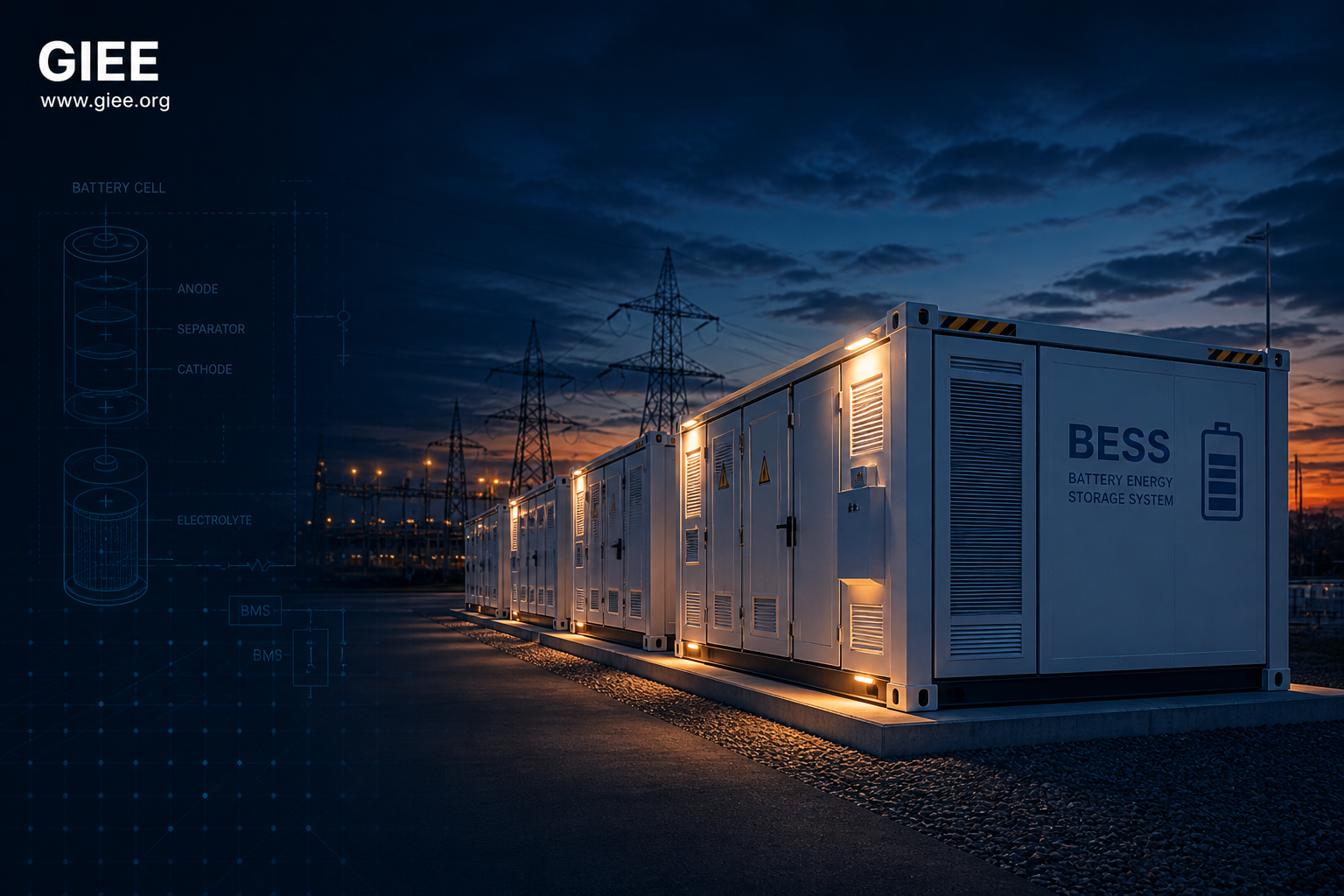
EE220: Battery Energy Storage Systems: Technologies and Applications
Original price was: $699.00.$399.00Current price is: $399.00.
Go from general awareness of battery storage to genuine working command: metrics, chemistry, architecture, and applications. Approximately 12 to 13 hours · Self-paced online · 6 months access · Certificate of completion.
Description
Battery storage has moved from pilot projects to a standard asset class on the grid. EE220 gives engineers and energy professionals a complete working command of battery energy storage systems: the metrics that govern every specification conversation, the chemistry that determines how systems perform, and the architecture that scales a single cell into a megawatt-scale installation.
Over approximately twelve to thirteen hours of self-paced video instruction, you will move from the foundational electrical concepts and metrics behind every storage conversation, through lithium-ion cell chemistry and the major commercial chemistries, into system architecture from cell to module to rack to complete system, and on to the application landscape across residential, C&I, and utility-scale settings.
WHAT YOU WILL LEARN
– The foundational metrics behind every storage conversation: capacity, C-rate, energy and power density, depth of discharge, state of charge, state of health, and round-trip efficiency
– How to read a BESS nameplate and datasheet critically
– How a lithium-ion cell works, and how NMC, LFP, NCA, and LTO compare on energy density, safety, cycle life, and cost
– System architecture from cell to module to rack to complete system, including the BMS, PCS, and EMS
– The application landscape across residential, C&I, and utility-scale settings, including value stacking
WHO THIS IS FOR
– Practicing engineers and energy professionals entering the storage field
– DER planning engineers and grid professionals
– Project developers, analysts, and consultants moving into the storage market
– Engineering managers and technical leads evaluating BESS projects and vendors
– Recent engineering graduates building expertise for storage roles
PREREQUISITES
Basic electrical concepts: AC and DC, voltage, and current. A technical or engineering background helps, and familiarity with power systems is helpful but not required. No prior battery storage knowledge required.
FORMAT
– Approximately 12 to 13 hours of self-paced video instruction
– 5 modules covering foundational electrical concepts, understanding BESS, battery chemistry, system architecture, and the applications taxonomy
– Anchored in real deployments including Hornsdale Power Reserve and Moss Landing, with real datasheet figures
– 5 module quizzes (30% of grade) plus a comprehensive final exam (70%)
– 6 months of full course access from enrollment; 90-day completion window
– Pass at 70%; performance level (Standard, Merit, Distinction) noted on internal transcript
CERTIFICATION
EE220 is the entry course of the three-course Certified BESS Professional (CBP) track, followed by EE221 (BESS Design and Sizing) and EE222 (Grid Integration, Codes, and Operations). It also stands entirely on its own for professionals who need a working command of battery storage without pursuing the credential.